Why do habits break the moment life changes? And what does it take to build change that survives the weekend, the vacation, and the snowstorm?
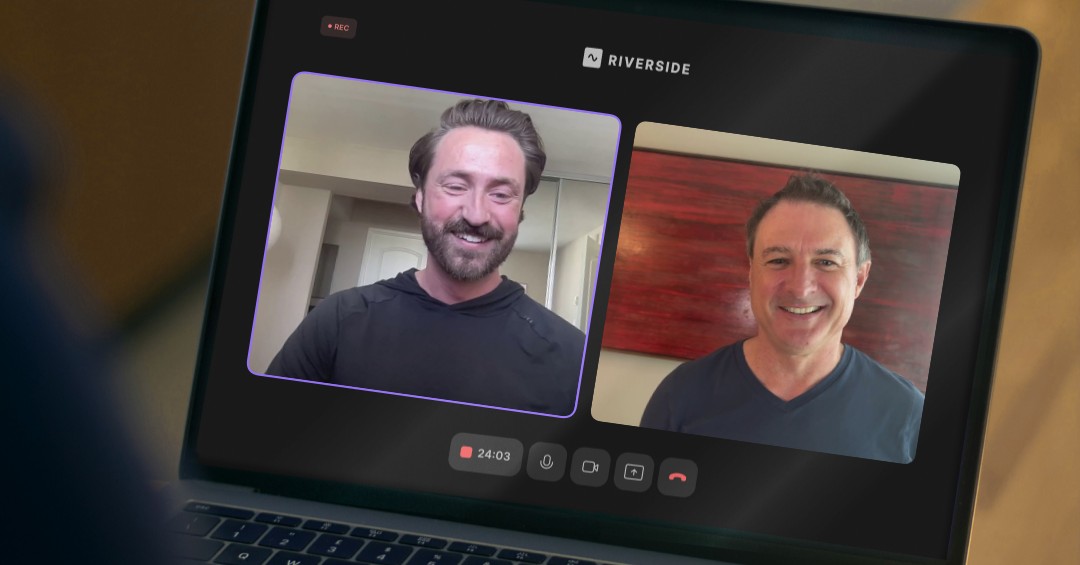
Stamina Lab CEO and co-founder Glen Lubbert joined host Collin Adams on Hello, Brain 🙂, the Brainnovation Network podcast, to explore those questions through the lens of the Solution-Focused approach, an evidence-based way of working built on a simple premise: the person in front of you is already competent and already doing some things that work. The full conversation is below, with the key learnings underneath.
Listen to the episode
Why habits break when context changes
After twenty-five years in health, wellness, and technology, including certification in the Tiny Habits approach under Stanford's BJ Fogg, Glen kept running into the same limit: a habit anchors a new behavior to an existing routine, and it holds only while the routine holds. Then the weekend arrives. The seasons turn. You travel. Context changes constantly, and when the anchor moves, the habit breaks.
The Solution-Focused approach starts somewhere else. Instead of engineering a tactic, the practitioner helps the person describe their preferred future in rich detail: what they want, what difference it will make, and what life looks like when it is already happening. Glen's metaphor is many paths to the same river. When one path is blocked, another opens, because the destination stays defined. The neuroscience supports this: as Lisa Feldman Barrett's work on the predictive brain shows, the brain forecasts based on what it attends to, and a vividly described future gives it something to predict toward.
The question is the intervention
The line Glen returns to throughout the episode: what you ask about is where the brain goes. He illustrates it with a client who arrives at a session braced to confess a half pint of ice cream. Instead of hunting for the trigger, the Solution-Focused practitioner asks: "What kept you from eating the full pint?" And the client begins describing agency they did not know they had shown. They were satisfied. They knew what they wanted. They stopped.
Our negativity bias discounts those moments of competence by default. The question aims attention at them, and once noticed, they compound.
"This is not a script. This is not a technique. This is a stance: how you show up in the world."
Collin tells his own story in the episode. As a personal trainer, he closed roughly 20 to 30 percent of his complimentary sessions. After training with Glen and Dr. Deborah Teplow, he began opening every session with one question: "What are you most hoping for?" Then he built the hour around the answer. His close rate went to 100 percent, and the sessions became more enjoyable for everyone in the room.
A stance that strengthens any protocol
For the brain-health practitioners in the show's audience, the conversation closes on integration. Neurofeedback and other brain technologies can take weeks to show measurable results, and clients often stop noticing before the data moves. Solution-Focused conversations fill that gap, keeping clients attuned to early signs of movement while the protocol does its work. Some clinics have rewritten their intake questionnaires on this principle, so that from the front desk to the clinician, every question becomes an intervention.
The evidence base makes this more than a philosophy. As Glen notes in the episode, the Solution-Focused approach draws on four decades of research, including over a hundred meta-analyses showing outcomes that equal or exceed other approaches, often in less time. He also shares that Foundations in Solution-Focused Health Coaching has been approved for 6.0 AMA PRA Category 1 Credits™ through Indiana University School of Medicine and approved for continuing education credits by the American Council on Exercise.
If you only remember five things
- Habits are tactics, and tactics break when context changes. A richly described preferred future survives the changes that break habits.
- The person in front of you is already competent and already doing some things that work, even a little.
- The question is the intervention. What you ask about is where the brain, and the conversation, will go.
- Progress is always present. "What kept you from eating the full pint?" surfaces agency that the negativity bias hides.
- The stance works at any length, from a five-minute front-desk conversation to a full coaching session.
The stance Glen describes in the episode is what practitioners develop in Foundations in Solution-Focused Health Coaching, the certification for health and performance professionals.
See the Stance in Action
Glen references five-minute conversations throughout the episode. Watch The 5-Minute Conversation That Changes Everything, our free demonstration of a complete Solution-Focused conversation in practice.
Watch the Free Training → This post is part of a deeper comparison. For a full side-by-side breakdown of how the Solution-Focused approach and Motivational Interviewing differ in assumptions, conversational structure, evidence base, and when each fits best, read our complete guide: Solution-Focused vs. Motivational Interviewing.
References
- Brainnovation Network. (2026). Interview series: Hello, Solution-Focused Coaching 🙂 [Podcast episode]. Hello, Brain 🙂.
- Barrett, L. F. (2017). How Emotions Are Made: The Secret Life of the Brain. Houghton Mifflin Harcourt.